

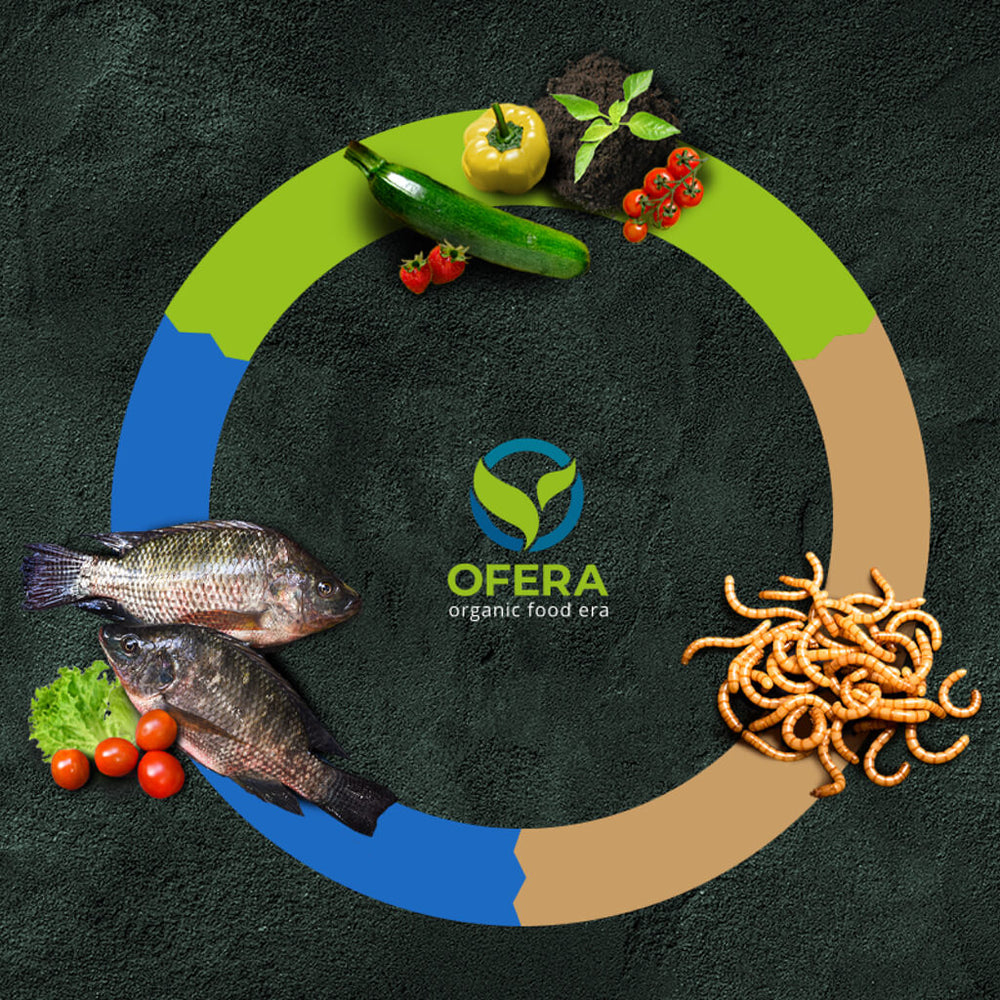

Want to build a DIY aquaponics system? At its core, you only need three main components: a fish tank, a grow bed, and a water pump. But if you want your aquaponics system to run stable long-term (and not turn into a green, smelly mess after a few weeks), there are a few fundamentals you should get right from the start.
In this guide, we’ll break down what actually matters when choosing each component, how to size your system properly, and which proven build approach fits your space, budget, and goals.
Fish Tank – How to choose the right tank for your aquaponics system
Your fish tank is the heart of the system and the habitat for your fish. You can use an existing aquarium, or a larger plastic container that’s strong enough to handle water pressure.
A very popular beginner-friendly option is IBC containers (often searched as “IBC tote aquaponics”). They’re widely available, relatively affordable (especially used), and reinforced by an outer metal cage. The top part of the IBC is typically cut off at around 30–35 cm height and used directly as a grow bed — giving you two core components in one step. If you care about aesthetics, you can easily clad the container with wood or other materials.

IBC containers vs. ready-made fish tanks – which aquaponics setup fits you?
IBC containers and standard industrial tanks are often the easiest entry into DIY aquaponics. Used IBC totes are common, inexpensive, and sturdy enough for many aquaponics systems. If you’re on a tight budget and don’t care too much about looks at first, an IBC (or a larger food-safe industrial container) is usually the smartest choice.
If you want a cleaner, more integrated look — or plan to build a permanent setup — you can also use ready-made aquaponics fish tanks. They come in different sizes and can be paired directly with modular grow beds, similar to an IBC system, but with a more polished finish.

Fish Tank Layouts & System Options
Standard
In the standard layout, the fish tank sits directly below the grow beds — the simplest and most common aquaponics design. Low-profile tanks work especially well when you want the grow beds placed at a comfortable working height.

CHOP2 (Constant Height One Pump)
Another proven option is a CHOP2 layout (Constant Height One Pump). Here, the fish tank overflows into a lower sump tank. The pump then returns water back into the system. One pump feeds the grow beds and (via a branch line) the higher fish tank. Ideally, the fish tank and grow beds sit at roughly the same height.
The big benefit: the water level fluctuation happens in the sump as the grow beds fill and drain. The fish tank stays at a constant water level (“constant height”), which is typically less stressful for fish.

What to consider when choosing a fish tank
- Only use clean containers that have never held chemicals or toxic liquids.
- Choose food-safe, non-toxic plastics free from plasticizers and heavy metals. Polyethylene (PE) is a great option.
- In a classic flood-and-drain system, the fish tank must sit below the grow bed so water can return by gravity.
- Alternatively, use a CHOP2 system layout (see above).
- Size the tank for your fish species and stocking plan: ~100 L+ for ornamental/aquarium fish, several hundred to thousands of liters for food fish like tilapia or catfish.
- As a rule of thumb, fish tank volume should be no more than 2× the grow bed volume.
- If you use glass aquariums, place them on a proper stand — never directly on the floor.
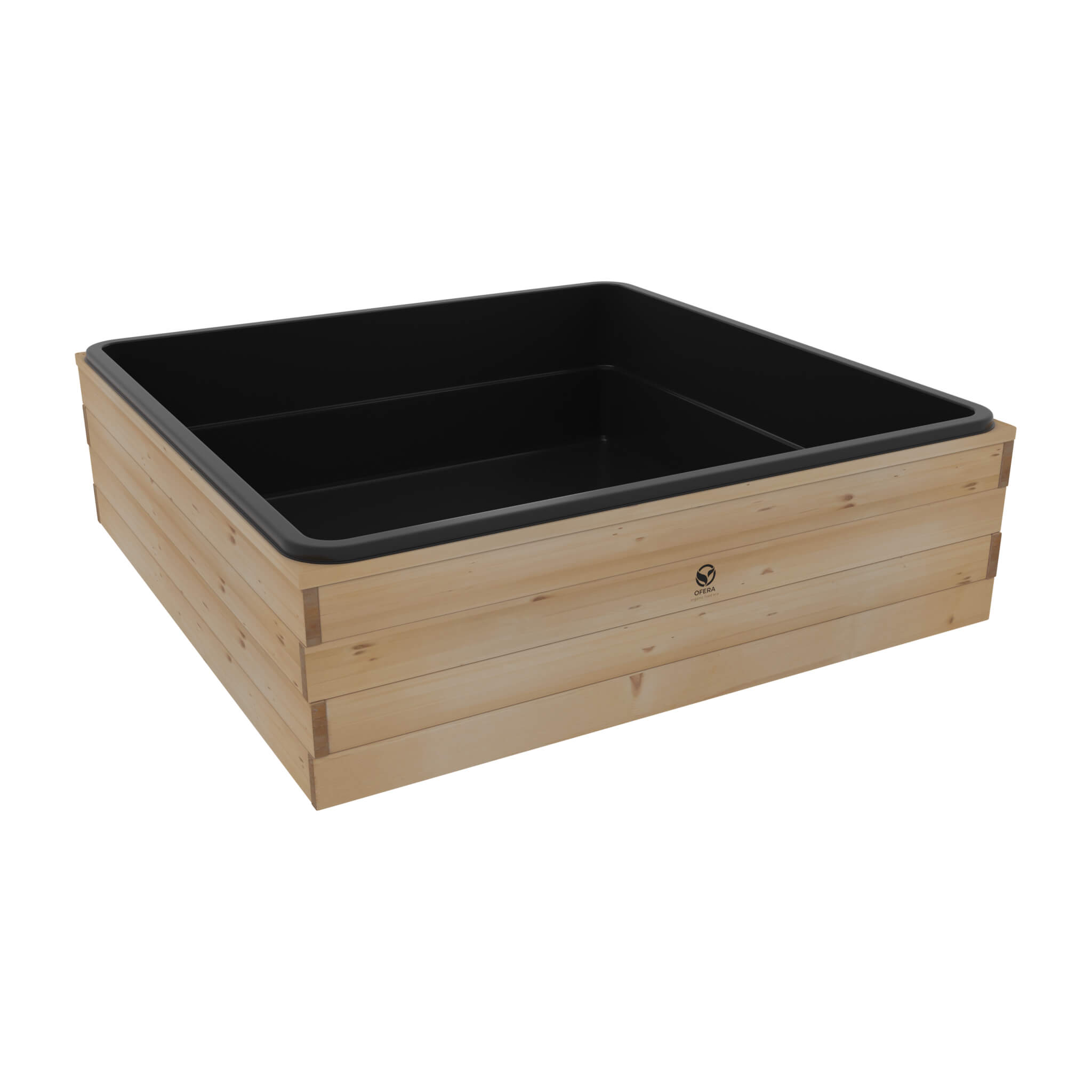
Examples of suitable fish tanks and sump tanks

Grow Bed – How to choose the right grow bed for aquaponics
Your grow bed is where plants live — and it also acts as a mechanical and biological filter. Just like with fish tanks, only use food-safe containers. Unlike the fish tank, it can actually be beneficial to use multiple smaller grow beds — and there’s a real advantage to that.
With multiple smaller grow beds and a bell siphon, you can stagger the flood-and-drain cycles. This reduces water level swings in the fish tank (less fish stress) and increases oxygenation as beds drain more frequently.
If you’re building an IBC system: the cut-off top section (usually 25–35 cm tall) works perfectly as a grow bed. In most IBC builds, a 25 cm or 30 cm bell siphon is the standard choice.

What to consider when choosing a grow bed
- Only use clean, food-safe containers — your vegetables will grow in them.
- Aim for at least 20 cm bed depth; 20–30 cm is typical for flood-and-drain.
- In a classic flood-and-drain layout, the grow bed must sit above the fish tank on a stable stand.
- As a baseline, target at least 50% grow bed volume vs. fish tank volume unless you add separate solids filtration or a dedicated biofilter.
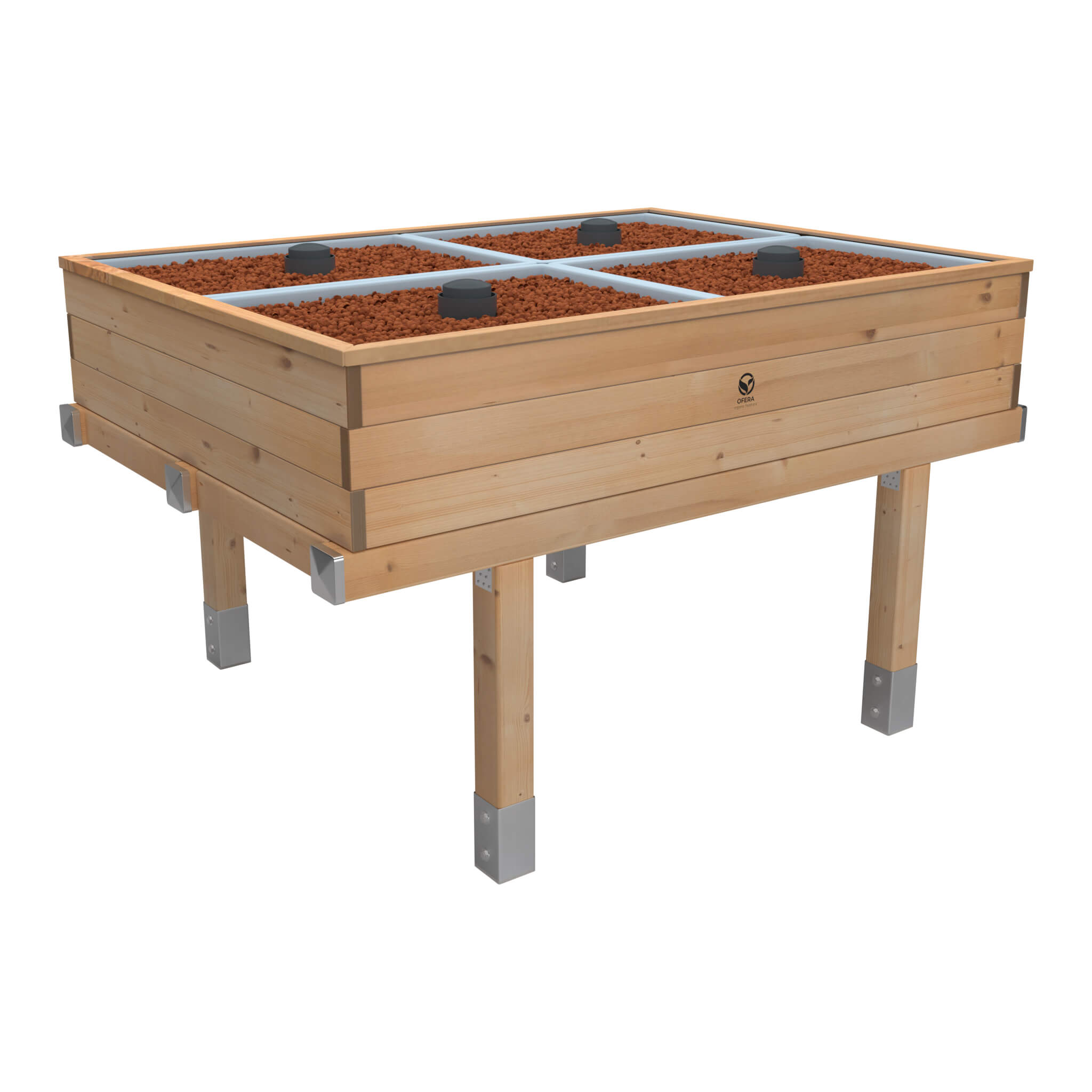
Examples of suitable grow beds

How big should my aquaponics system be?
This is one of the most common beginner questions — and you can answer it with a few simple questions and rules of thumb.
Start by asking yourself:
- How much space do I actually have available?
- How much fish do I want to produce?
From that, you can derive your fish tank size. The fish tank size then determines the required grow bed volume — and therefore how much plant area you can support. In most home systems, having more grow bed volume is rarely a problem; plant space is usually not the limiting factor.
- Fish tank to grow bed: Grow bed volume should be at least 50%, ideally 100% of fish tank volume. A 1,000 L tank typically needs at least ~500 L of grow bed capacity.
- Stocking density: A common baseline is ~20–40 kg of fish per 1,000 L, depending on species, filtration, and aeration. With strong filtration and experience, higher densities are possible.
- Pump flow rate: Your pump should circulate the full system water volume at least once per hour.
A classic IBC DIY setup — grow bed on top, fish tank below — is often the cheapest and simplest way to get started. With used IBC totes and a few matching components, you can build a fully working first system. Check out our DIY components or keep reading for the next step.
Pump – How to choose the right pump for aquaponics
Choosing the right aquaponics pump isn’t always straightforward. Two values matter most: flow rate and head height.
Head height is the maximum vertical distance the pump can push water — measured from the water level in the fish tank to the inlet at the grow bed. Flow rate is how many liters per hour (L/h) the pump can move — but be careful: the advertised max flow rate usually applies only at 0 m head height. The higher you pump, the lower the real flow. This is one of the most common buying mistakes.
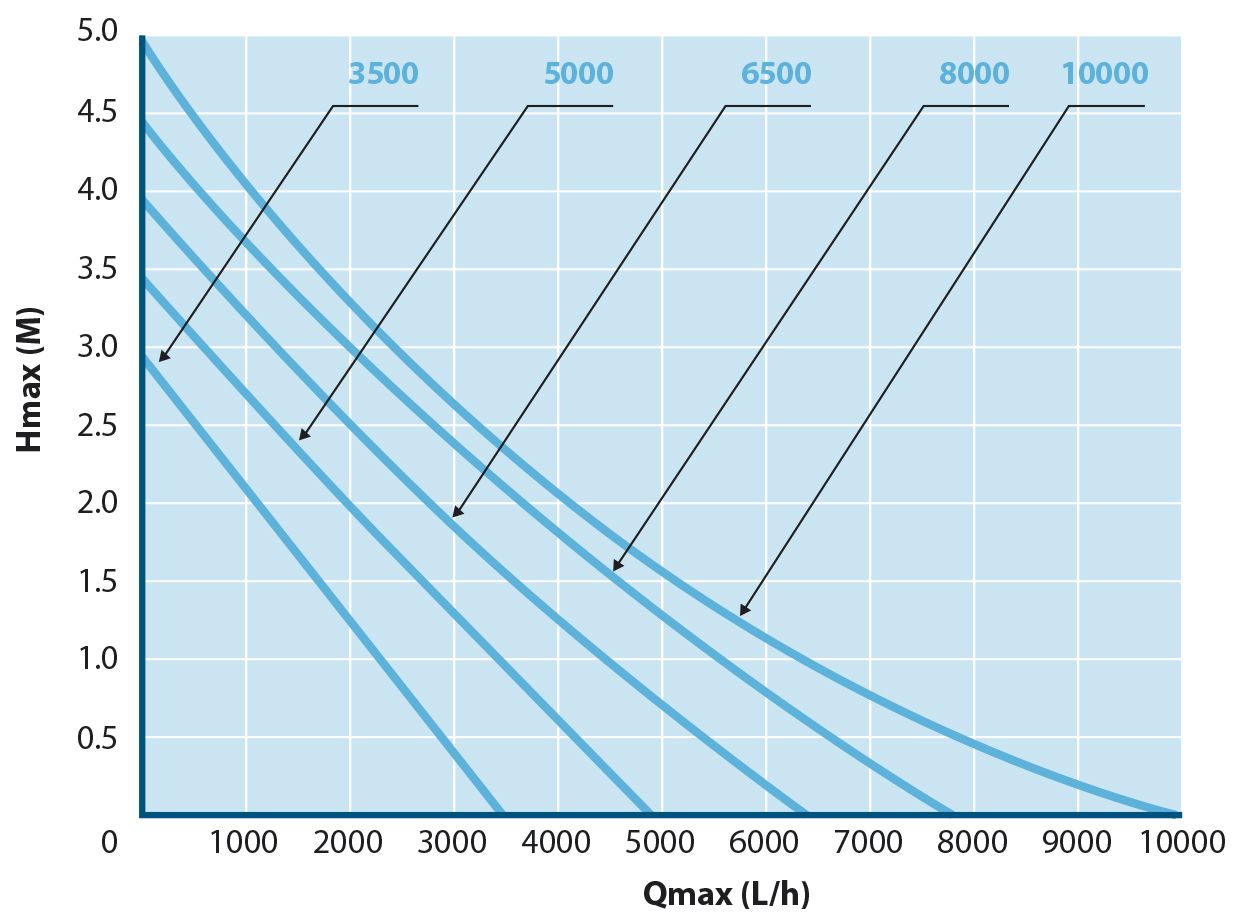
Example: A pump rated for 3 m max head and 3,500 L/h might deliver only around ~1,750 L/h at 1.5 m head. If your grow bed sits roughly 1 m above the tank, this is often enough for a beginner system.
Examples of aquaponics pumps
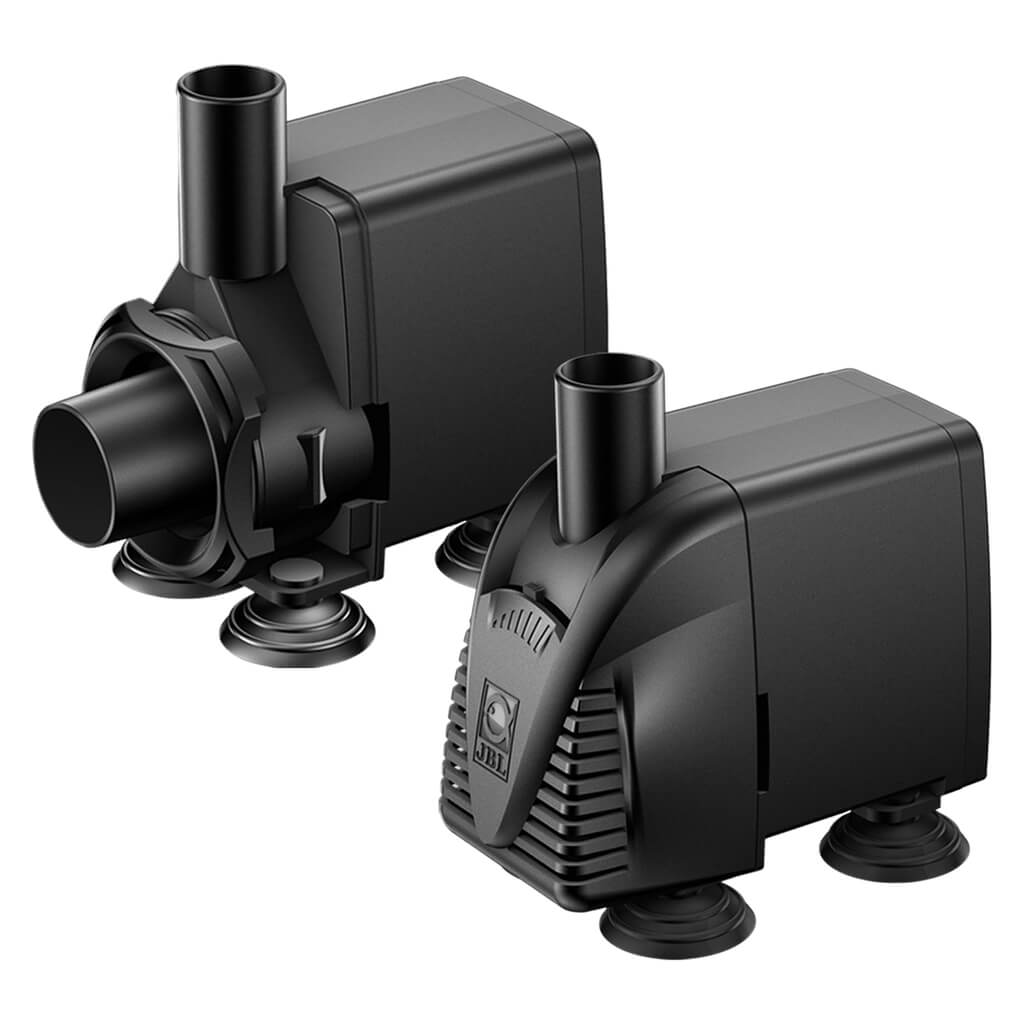

What to consider when choosing a pump
- Considering head height, your pump should circulate the fish tank volume at least once per hour.
- The pump should be fully submersible (IPX8).
- For solar pumps: maximum output only happens in perfect sun — when in doubt, size up.
Flood and Drain – Bell siphon drainage for your grow bed
To run a grow bed as a flood-and-drain system, you typically use a bell siphon. It drains the bed automatically: once the water reaches a set level, the siphon triggers and empties the grow bed back into the fish tank — no electricity required, just physics.
This matters because plant roots need alternating access to water and oxygen. A constantly flooded bed can suffocate roots. The bell siphon creates that cycle automatically. At the same time, beneficial bacteria establish in the grow bed and convert fish waste into plant-available nutrients — the core of the aquaponics loop.
We explain the mechanics in detail here: How an aquaponics bell siphon works.

PVC-U pipes, hoses & fittings
PVC-U is food-safe and even approved for drinking water — one reason it’s a standard in aquaponics. With tees, elbows, and other fittings, you can build very flexible plumbing layouts.
PVC-U pipes and fittings are bonded with a special PVC-U glue. During setup, it’s often helpful to dry-fit and seal threads with PTFE (Teflon) tape so you can still adjust positions. Once everything is final: glue it.
What to consider for PVC-U plumbing
- Use high-quality, drinking-water-rated PVC-U parts.
- Use a flexible hose at the pump outlet so you can remove the pump easily for cleaning.
- Add ball valves to regulate flow to each grow bed — important for fine-tuning your bell siphon.
Find all pipes, fittings and accessories in our Pipes & Fittings collection.
Ready to build? Choose your path
The classic flood-and-drain system
You now know the core principles: fish tank below, grow bed above, and the pump + bell siphon do the rest. This is the proven beginner setup — simple, affordable, and reliable.
Not sure if flood-and-drain is right for you? We explain the differences between Flood & Drain, NFT, and DWC so you know what to expect.

More output from day one – the 3-IBC high-performance system
If you want higher filtration capacity and more yield from the start — and you want to build a fully DIY system without ready-made modules — take a look at the 3-IBC high-performance system. Its logic intentionally differs from the classic flood-and-drain approach: the IBCs are used partly as fish tanks and partly as highly effective filtration stages, allowing for higher stocking density and more output.
This system is more complex than a basic beginner build, but still very doable for ambitious beginners.
You can choose:


You can also combine the 3-IBC system with ready-made OFERA fish tanks & sump tanks and grow beds — your planning stays flexible. Contact us and we’ll help you choose the right setup.
Questions about the core components or different build approaches — or want to share your experience? Drop a comment below.


Hallo Andreas!
Vielen Dank für deinen Beitrag und deine Frage. Bei der Aquaponik brauchst du im Prinzip kein laufendes Frischwasser, da das Wasser im Kreislauf die Nährstoffe für die Pflanzen zur Verfügung stellt, und sich immer wieder selbst reinigt.
Hab 40 s/l Frischwasser zu Verfügung?
Wie groß müsste meine aquaponiganlage sein
Hallo! Grundsätzlich ist das natürlich möglich, allerdings müssten dem Wasser dann die Nährstoffe für die Pflanzen über eine Nährstofflösung zugeführt werden. Die Komponenten Wasser-Sammelbecken, und Pflanzbeete inkl. Pumpe usw. würde dann aber gleich bleiben und nach dem selben Prinzip funktionieren, als wenn Fische im Becken wären. Auch ein Komplettsystem wie der Cycle-Garden 2X würde sich hierfür anbieten.
Hallo, wir würden so eine Anlage gerne ohne Fische betreiben. Wie oder mit was wäre das sinnvoll möglich?
Vielen Dank. Schöne Grüße, Groß
Hallo Peter!
Doch, so eine Lösung nennt man dann CHOP (Constant-Height-One-Pump) Dann braucht man einen zusätzlichen Sump-Tank, der niedriger steht und das Wasser auffängt! Das heißt, das Wasser wird vom Sump-Tank in die Grow-Beds und gleichzeitig über eine Abzweigung, in einen vom Höhenniveau etwa gleich platzierten Fischtank gepumpt. Das Wasser vom Fischtank fließt dann über einen Überlauf direkt wieder zurück in den Sumpf. Die Grow-Beds entleeren sich ebenfalls über dem Sumpf! Der Sumpf-Tank ist sozusagen ein „Mixbecken“ und der Fish-Tank behält in dem Fall seinen Wasserspiegel konstant bei.
Leave a comment