


An aquarium can be more than just a home for fish. With an aquaponics aquarium, you combine fishkeeping and plant growing in a closed-loop aquaponics system — sustainable, space-saving, and right at home.
An aquaponics aquarium is the compact version of a classic aquaponic farming setup for home use. It lets you experience biology and technology as a working mini-ecosystem — while growing fresh herbs or leafy greens yourself.
Table of Contents
- Aquaponics explained simply
- An aquarium as an extended ecosystem
- Why an aquaponics fish tank at home?
- Build an aquaponics aquarium — step by step
- What plants work best?
- What fish work best?
- Maintenance and care
- Conclusion
- Frequently asked questions (FAQ)
Aquaponics explained simply
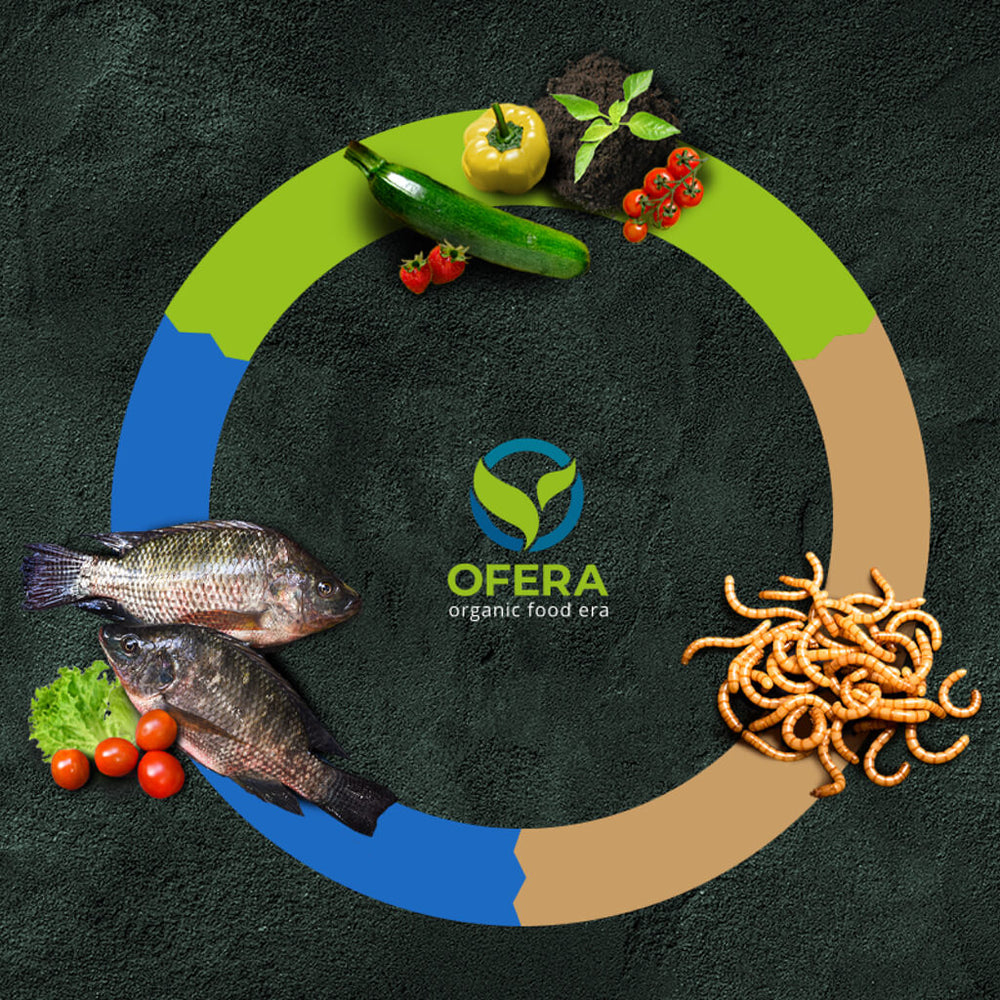
Aquaponics is a sustainable method where fish, plants, and microorganisms work together in a natural cycle.
- Fish produce waste (ammonia).
- Beneficial bacteria convert ammonia into nitrite and then nitrate.
- Plants use nitrate as a nutrient.
- The cleaned water flows back into the aquarium.
The result is a closed ecosystem that saves water, makes synthetic fertilizer unnecessary, and gives you fresh greens right at home — an ideal aquaponics for beginners entry point.

An aquarium as an extended ecosystem
An aquarium is already a sensitive biological system where fish, plants, and microorganisms balance each other.
In aquaponics, this interaction is intentionally expanded: by adding a aquaponics grow bed, plants and bacteria actively take over much of the filtration work. Nutrients from fish waste aren’t just broken down — they’re directly converted into plant growth.
This creates a stable, natural cycle that connects technology and biology in a meaningful way — perfect for a small aquaponics system or indoor aquaponics system.
Why an aquaponics fish tank at home?
An aquarium is ideal for getting started with aquaponics at home, especially if you have limited space. You can observe the biology-and-technology cycle up close and harvest fresh herbs and greens for your kitchen.
Your benefits
- Fresh vegetables & herbs at home: Always within reach for cooking.
- Decorative highlight: Lush greens above the tank — a living underwater world below.
- Closed nutrient cycle: Fish waste becomes plant nutrients.
- Fewer water changes: The grow bed handles a large part of the biological filtration.
- Sustainable resource use: Water stays in circulation and is continuously reused.
An aquaponics aquarium combines utility, sustainability, and aesthetics in one system.

Build an aquaponics aquarium — step by step
Step 1: Prepare the aquarium
The aquarium is the foundation of the system. It provides nutrient-rich water for your plants.
- Tank sizes between 100–300 liters work well. Set up your aquarium as usual — substrate, decor, and any existing equipment.
- Existing aquariums can usually be upgraded without issues.
- If you’re starting from scratch, it’s worth reviewing the basics (location, substrate, cycling, stocking) in established aquarium guides.
Step 2: Install the grow bed
The grow bed is the heart of your aquaponics aquarium system. This is where plants grow — and where much of the biological filtration happens. It’s mounted above the tank and filled with aquaponics grow media.
- Use a sturdy frame made of wood, metal, or a stable shelving system. It must safely support the weight of the grow bed.
- Choose a food-safe container with at least ~30 liters volume and a minimum height of 20 cm.
- Drill a centered hole for the bulkhead fitting to install the bell siphon.
- A free-draining return line into the aquarium is essential.
Step 3: Install the bell siphon
The bell siphon (also spelled “bell syphon”) automates the flood-and-drain cycle of the grow bed — purely mechanically through gravity and the siphon effect.
- Water is pumped into the grow bed.
- The siphon triggers at a certain water level.
- Water drains back into the aquarium.
- This also increases oxygenation.
- Draining stops automatically, and the grow bed refills.
Ideally, the bell siphon sits centered in the grow bed at the bulkhead fitting. You can build a bell siphon DIY setup — or, if you want to avoid trial and error, buy a ready-made kit.

Step 4: Add grow media
A common choice is expanded clay pebbles (LECA/Hydroton). They hold moisture, stabilize plants, and provide a large surface area for bacteria and microbes — an important part of aquaponics filtration.
- Rinse the media thoroughly before use.
- Keep the media guard stable while filling.
- The standpipe is typically about 2 inch shorter than the media height.
Step 5: Install the pump
An aquaponics water pump moves water continuously from the aquarium to the grow bed.
- Place the pump in the aquarium.
- Run a line (hose or rigid plumbing) up into the grow bed.
- Use a ball valve in the line to regulate flow.
The goal is a steady inflow so the grow bed water level rises and the roots receive nutrients. Once the target level is reached, the bell siphon triggers and drains the grow bed back into the fish tank.
Step 6: Cycle the system
After installation, the loop begins running immediately — but the biology needs time to establish.
- To kick-start the process, a bacteria starter culture can help.
- During cycling, bacteria colonize the grow media and begin nitrification: ammonium turns into nitrite and then nitrate.
- After a few days, surfaces should be well colonized and the system biology becomes more stable.
Step 7: Add plants
Once the system is running reliably, you can add your first plants. For seedlings, rockwool starter cubes work well and can be placed directly into the grow media.

What plants work best in an aquaponics aquarium?
In an aquaponics aquarium, fast-growing herbs and leafy greens with moderate nutrient needs tend to do best. Great options include basil, lettuce, mint, and arugula — often listed among the best plants for aquaponics.
- Basil
- Mint
- Parsley
- Chives
- Lettuce
- Spinach
- Arugula (Rocket)
- Cress & microgreens
What fish work best in an aquaponics fish tank?
Choose hardy freshwater fish that match your temperature range and system size. Common choices include:
- Guppies
- Goldfish
- Zebra danios
- Tilapia (for larger systems)
Stocking density and water temperature matter most. If you’re researching the best fish for aquaponics, always align the species with your tank volume and your ability to maintain stable water parameters.
Maintenance and care
With proper sizing, an aquaponics aquarium is usually not much more maintenance-intensive than a standard aquarium — you’ll just add plant care and harvesting.
- Regularly check water parameters, fish health, and plant growth to keep the system stable.
- Depending on fish load and pre-filtration, the grow media may occasionally need to be rinsed or cleaned as needed.
- When cleaning, avoid removing all beneficial bacteria — similar to cleaning a biological aquarium filter.
Conclusion
An aquaponics aquarium combines fishkeeping and plant growing in a sustainable mini ecosystem. It’s space-saving, efficient, and fascinating to watch — and it makes natural cycles tangible in your living space.
Frequently asked questions (FAQ)
How much maintenance does an aquaponics aquarium need?
Usually not more than a standard aquarium — plus basic plant care and harvesting.
Can I convert any aquarium into an aquaponics system?
In principle, yes. The key is correct sizing, a stable mounting structure, and well-matched equipment.
Do I need additional lighting?
If you have limited daylight, an LED grow light is recommended for healthy plant growth — especially for an indoor aquaponics setup.


Leave a comment